Stainless Steel Manual Dicer: 1/4 & 3/8 Dice Guide
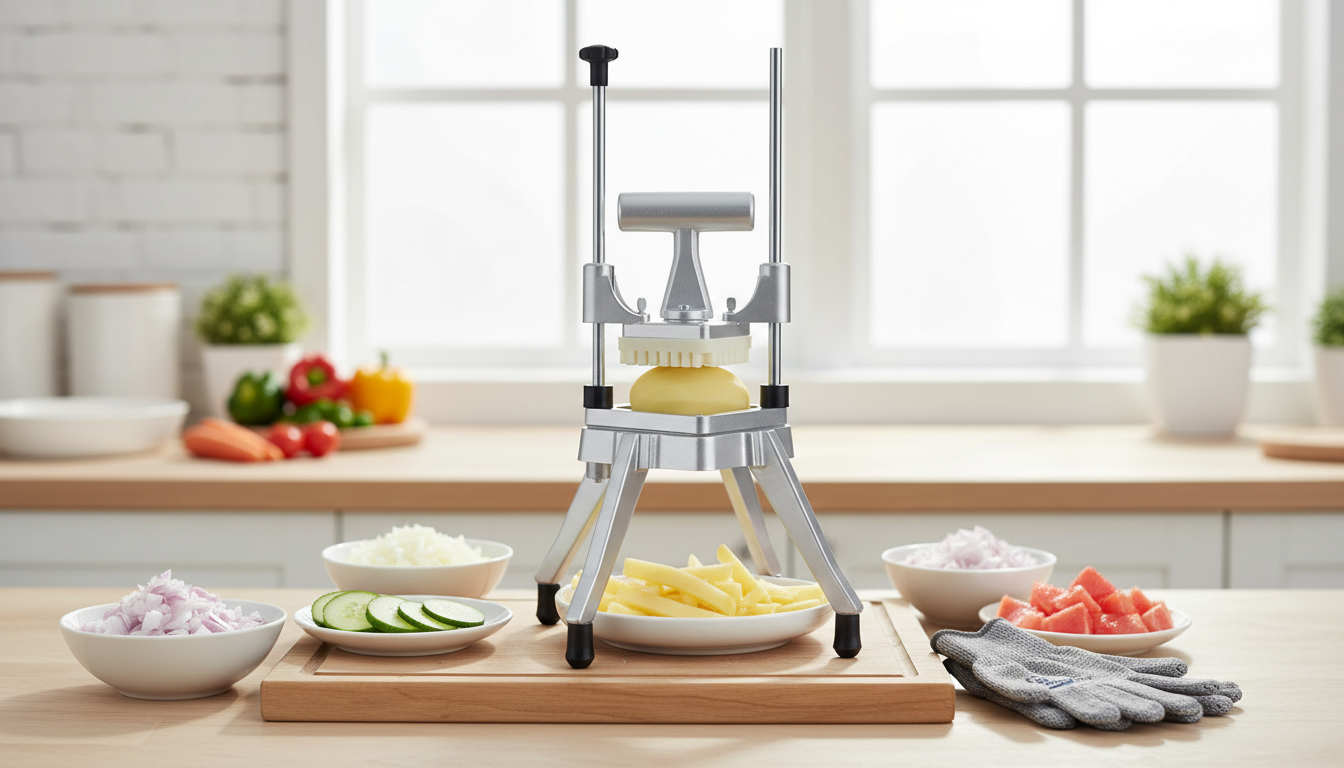
Commercial Manual Vegetable & Fruit Dicer Cutter (Stainless Steel) — 3/8″ and 1/4″ Dice
Consistent, uniform cuts help kitchens move faster and plate more reliably. A commercial manual dicer is built to turn common prep tasks—dicing onions, peppers, potatoes, tomatoes, and fruit—into quick, repeatable motions without relying on electricity. This stainless steel manual dicer includes two common dice sizes (3/8″ and 1/4″) suited for salsas, soups, salads, fries, and garnishes.
What It’s Used For in a Busy Kitchen
When prep volume climbs, hand dicing can become a bottleneck. A manual dicer helps standardize size and speed up repetitive cuts while keeping output consistent across shifts.
- Fast, uniform dicing for high-volume prep: onions, celery, peppers, cucumbers, apples, and more
- Portion and presentation consistency for salads, pico de gallo, stir-fries, stews, and toppings
- Supports batch prep workflows: dice into hotel pans, cambros, or prep bowls
- Manual operation suits food trucks, pop-ups, and prep stations where outlets are limited
- Two dice sizes cover many menus: smaller dice for salsas/relishes and larger dice for soups/salads
Key Components and How They Work
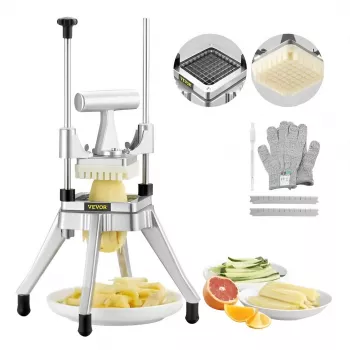
Most commercial manual dicers follow the same proven layout: a sturdy frame, a blade grid, and a pusher that drives produce cleanly through the grid. The result is a repeatable cube size that’s hard to match by hand at speed.
- Stainless steel body and blade grids designed for repeated commercial use and easier washdown
- Interchangeable blade sizes: 1/4″ grid for finer dice; 3/8″ grid for chunkier dice
- Lever-driven pressing action pushes produce through the grid for uniform cubes
- Best results come from trimming produce to fit the cutting area and removing tough stems/cores
- Ideal produce condition: firm and fresh; very soft items can smear rather than cleanly cube
For cleaner cubes, take a few seconds to square off rounded items. Halve large onions, trim pepper shoulders, and cut potatoes to a size that sits flat and stable before pressing. A steady, controlled pull typically delivers better definition than a fast slam, especially on tomatoes and fruit.
Choosing Between 1/4″ and 3/8″ Dice
The “right” dice size is mostly about texture and how the ingredient behaves in the finished dish. Smaller dice blends into sauces and spreads evenly across a bite; larger dice holds shape and reads as more substantial on the plate.
- 1/4″ dice: great for salsas, onion/celery mirepoix for sauces, and finely chopped salad toppings
- 3/8″ dice: better for hearty soups, chowders, fruit cups, and chunky veggie medleys
- Consider cook time and texture: smaller dice cooks faster and blends into sauces; larger dice holds shape
- Match to portioning: larger dice can look fuller on the plate; smaller dice spreads more evenly
- Many kitchens keep both grids ready to switch based on the prep list
Quick guide to dice size selection
| Dice size | Best for | Typical examples |
|---|---|---|
| 1/4″ | Finer, faster-cooking dice; even distribution | Salsa, relish, mirepoix, topping onions |
| 3/8″ | Chunkier bite; better shape retention | Soups, stews, fruit salads, roasted veg prep |
Setup and Daily Workflow Tips
A few small setup habits can make a manual dicer feel like a true line-saving tool instead of another gadget on the prep table.
- Stabilize the unit on a level surface; use a non-slip mat if the station is slick
- Pre-trim produce: halve large onions, cut potatoes to fit, remove cores/pits and tough ends
- Press in steady, controlled strokes to reduce crushing and improve cube definition
- Stage containers under the output area to minimize handling and reduce cross-contamination risk
- For high-volume prep, rotate tasks: trim a batch, dice a batch, then swap blade size as needed
For tomatoes, stone fruit, or softer items, chilling the produce for a short time can firm it up and reduce smearing. If the menu calls for both dice sizes, keep a labeled pan for each output so the right cut goes to the right station without re-sorting.
Cleaning, Sanitizing, and Blade Care
Fast prep only helps if cleanup stays manageable and food-safety standards are met. Stainless steel surfaces generally wash down well, but blade grids require careful handling.
For sanitation references and best practices, consult the FDA Food Code and the USDA’s guidance on kitchen equipment cleaning and food safety. Using clean rinse water matters, too—especially during long prep runs where starch and sugars accumulate.
Common Issues and Simple Fixes
Product Option Available
- Commercial Manual Vegetable Fruit Dicer Cutter 3/8″ & 1/4″ Stainless Steel: a manual, stainless steel dicer featuring two dice sizes for flexible prep across menus
- Best for operators who want repeatable dicing for batch prep, food trucks, and stations where plug-in equipment isn’t ideal
To support rinse-and-repeat prep (especially with potatoes and fruit), consistent clean water helps reduce residue and odors between wash cycles. Consider pairing your prep area with the 52-Cup 5-Stage Water Filter Dispenser with Real-Time TDS Meter & Lead Reduction for convenient access to filtered water for drinking and general kitchen use.
FAQ
Can a manual dicer handle potatoes and onions for bulk prep?
Yes—firm produce like potatoes and onions are common use cases. Trim pieces to fit the cutting area, apply steady pressure, and rinse starch often to keep the grid clear.
Which dice size is better for salsa: 1/4″ or 3/8″?
1/4″ is typically preferred for salsa because it distributes more evenly and gives a finer texture, while 3/8″ suits chunkier styles and heartier mixes.
How should the stainless steel blade grid be cleaned safely?
Disassemble, rinse promptly, scrub with a soft brush, then sanitize per local requirements. Avoid scraping the cutting edges; store the grid so edges are protected.



Leave a comment