French-Door Digital Air Fryer Toaster Oven (24L, 17 Presets)
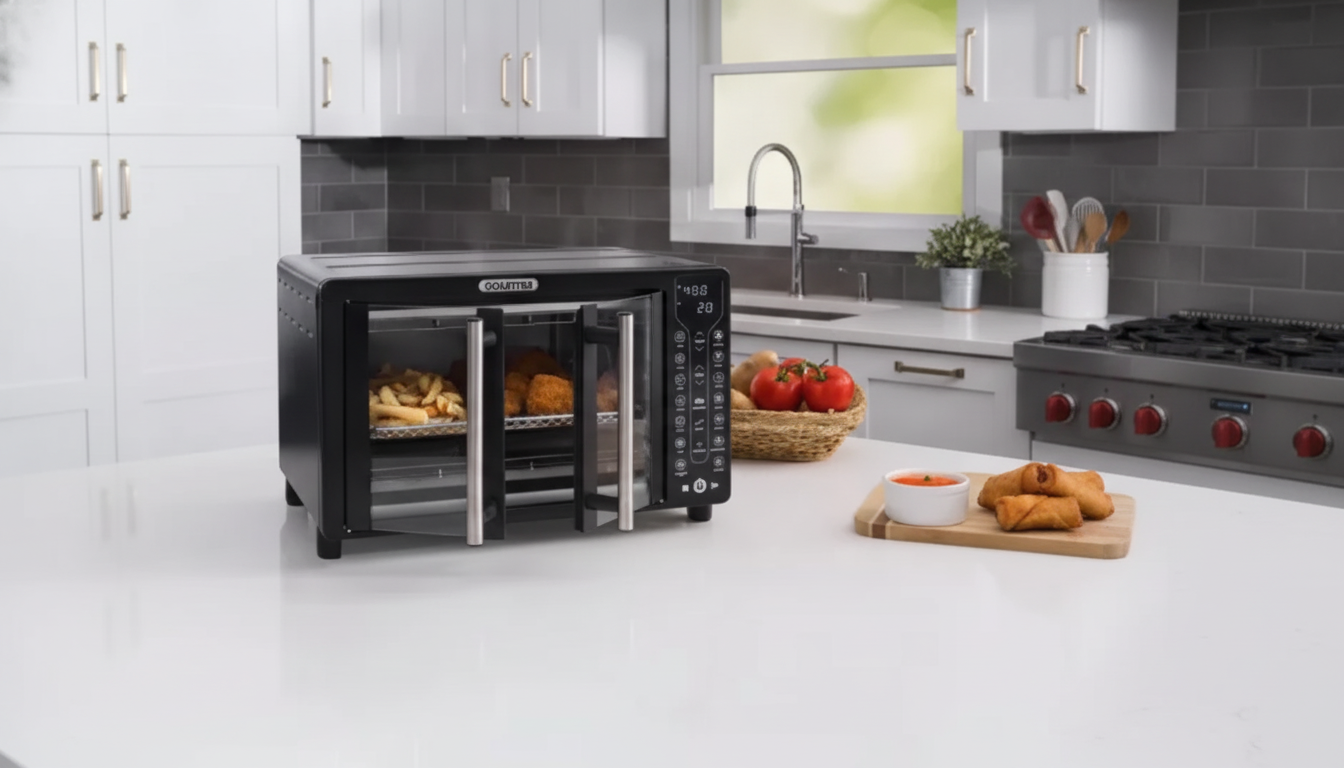
Digital Air Fryer Toaster Oven Combo with French Doors: Everyday Convenience in a Roomy 24L Countertop Oven
A countertop oven that air-fries, toasts, bakes, and roasts can replace multiple appliances while keeping weeknight cooking simple. This French-door digital combo focuses on fast access, one-touch presets, and enough interior room for family-sized trays—without taking over the entire counter. With 1700W of heating power and a 24L interior, it’s designed for crisp finishes, reliable browning, and easy meal pacing when time is tight.
At a glance: what this French-door combo is built to do
- Combines air frying and toaster-oven functions in a single 24L cavity for everyday meals and snacks.
- French doors open outward for easy tray access and reduced reach-over compared with a single drop-down door.
- Digital controls with 17 presets aim to minimize guesswork for common foods.
- 1700W heating supports quick preheat and strong top/bottom heat for crisping and browning.
Key features that matter day to day
French-door access that fits real cooking habits
French doors are about workflow: opening the oven to check toast, rotate a tray, or pull a rack shouldn’t require balancing a hot pan over a big drop-down door. With side-opening doors, it’s typically easier to slide racks forward, peek at browning, and remove food with less reach-over—especially helpful when cooking on a higher counter or in a tighter kitchen.
Digital presets for repeatable results
Presets are most valuable when cooking the same foods often—fries after school, wings for game night, toast at breakfast, pizza slices for lunch. Instead of remembering last week’s settings, you can start from a preset and then adjust time or temperature based on batch size and personal crispness preferences.
24L capacity that supports “main + side” cooking
A 24L interior generally works well for small family portions, sheet-pan style meals, and cooking multiple items in sequence without waiting on a full-size oven. If your accessories support multi-rack use, it can also streamline meal prep (for example: crisp vegetables after roasting chicken, or bake a quick tray of cookies after dinner).
1700W power for better browning and crisping
Air-fry style cooking depends on strong heat and circulating hot air to dry the surface and promote browning. A 1700W countertop oven is built to get up to temperature quickly and deliver the kind of crisp edges people expect from air frying—without a pot of oil on the stove.
Countertop-friendly versatility
This kind of combo oven is a practical fit for apartments, dorms, RV kitchens, or as an overflow oven during holidays. It’s also useful when the main oven is busy (or too large) and you want to cook smaller batches more efficiently.
What the 17 presets are good for (and when to go manual)
Presets work best for frequently repeated foods where time/temperature ranges are predictable. That said, thickness, moisture, sugar content, and how full the tray is can change results quickly—so manual adjustments still matter.
- Use presets as a reliable starting point, then tweak for larger batches or extra-crispy finishes.
- Go manual for thicker cuts, frozen-to-crispy experiments, and batch cooking where later trays cook faster.
- Use a food thermometer to confirm doneness when presets are used as a baseline.
- Shake or turn food halfway through for more even browning, especially fries, nuggets, and vegetables.
Preset-style cooking guide (typical best uses)
| Preset category | Best for | Helpful tip |
|---|---|---|
| Air fry / fries | Frozen fries, wedges, tots | Shake or toss at the halfway point for even crisping |
| Wings / chicken | Party wings, drumettes, tenders | Pat dry and leave space between pieces for better browning |
| Toast / bagel | Daily toast, bagels, reheating pastry edges | Use a lower shade/time for sugar-heavy breads to prevent scorching |
| Bake | Muffins, cookies, small cakes | Check early; countertop ovens can brown faster than full-size ovens |
| Pizza / reheat | Slices, thin crusts, leftovers | Reheat on a rack for a drier, crispier base; use a tray for softer results |
| Roast | Vegetables, small roasts, sheet-pan meals | Preheat and use a thermometer to confirm doneness |
Capacity and fit: making the most of 24L
A 24L interior typically accommodates meal-sized portions and larger pans than a compact toaster. To get the most from air-fry performance, leave airflow space around the food—overcrowding traps steam and reduces browning.
Controls and workflow for faster weeknights
Cleaning and maintenance habits that keep performance steady
Safety and cooking temperatures
For safe minimum internal temperatures, refer to the USDA chart: USDA Food Safety and Inspection Service — Safe Minimum Internal Temperatures. For cooking fire safety basics, see: NFPA — Home Cooking Fire Safety.
Product options available now
- Digital Air Fryer Toaster Oven Combo with French Doors, 17 Presets, 1700W, 24L: a practical pick for preset-driven cooking, roomy capacity, and quick access through French doors.
- 52-Cup 5-Stage Water Filter Dispenser with Real-Time TDS Meter & Lead Reduction: a helpful countertop companion for cooking, baking, and beverage prep when you want filtered water on hand.
FAQ
Do air fryer toaster oven combos cook faster than a regular oven?
Often, yes—because the smaller cavity and circulating hot air can reduce preheat time and speed up cooking. Results still vary by food thickness and how crowded the tray is, so start checking early and confirm doneness with a thermometer.
Are French doors better than a single drop-down door on a countertop oven?
French doors can make access easier since you don’t have to reach over a hot door to pull out racks or trays. The tradeoff is needing a bit of side clearance so both doors can open fully.
What internal temperature should chicken reach when using a preset?
Use a thermometer and follow USDA guidance: chicken should reach 165°F minimum internal temperature. Presets are a starting point, but internal temperature is the reliable way to confirm safety.





Leave a comment