Build a Cat Wall: Mounted Shelves & Perches That Feel Safe
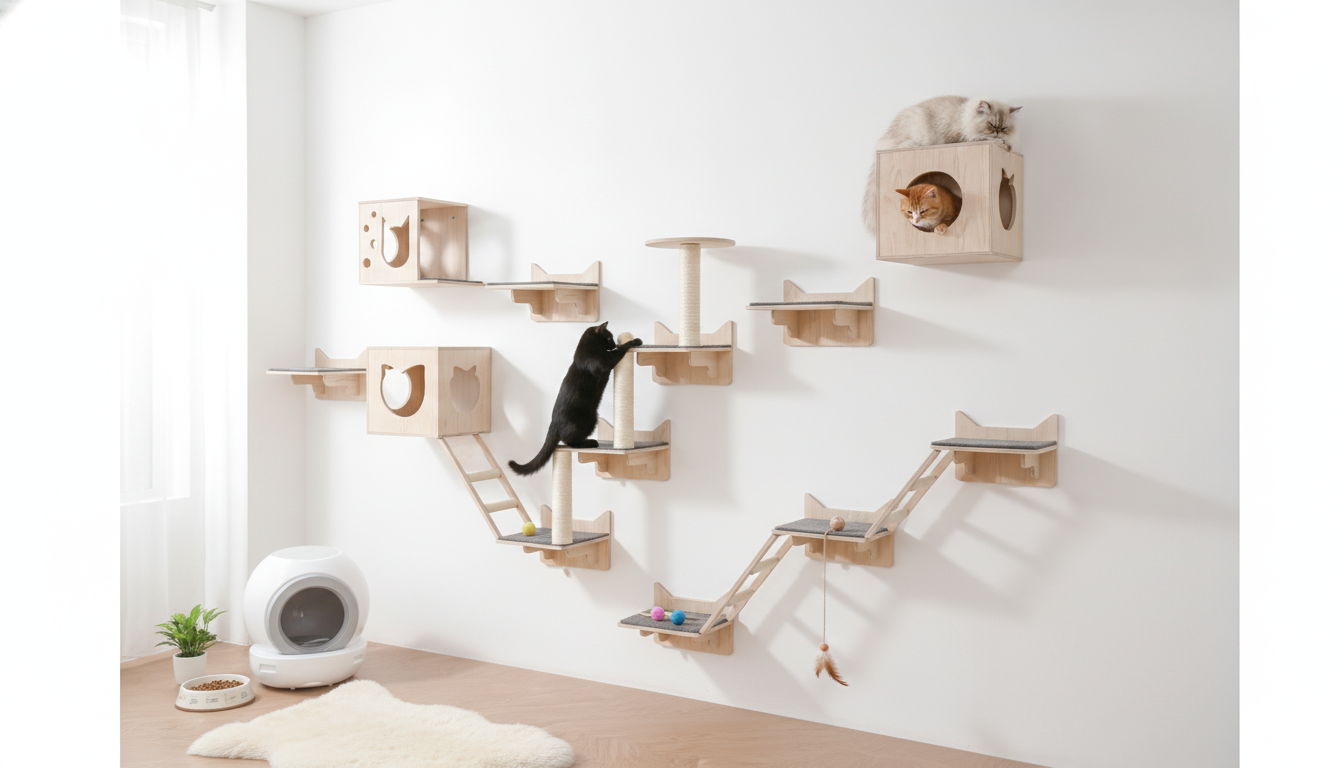
Wall Mounted Cat Shelves & Perches Set: Create a Safe Vertical Playground at Home
Wall-mounted shelves and perches add vertical space that helps many cats feel secure, stay active, and reduce conflict in multi-cat homes. A well-planned “cat wall” can turn an ordinary room into a climbing route with lookout points, naps-in-the-sun spots, and clear pathways that keep cats from crowding each other on the floor. Below are practical tips for choosing the right set, mapping a route that fits real rooms, and installing it so it feels rock-solid under confident jumps.
Why wall-mounted shelves and perches work for most cats
Cats are natural climbers and observers. Vertical territory supports their instincts while keeping your living space functional.
- Natural climbing and lookout behavior: Indoor cats often have limited “territory,” and height adds meaningful space without rearranging furniture.
- Less tension in multi-cat homes: Wall routes create separate lanes and resting spots, so one cat can pass without a confrontation.
- Daily movement: Stepping up, balancing, and jumping provide routine activity that helps with weight management and boredom.
- Confidence for shy cats: A higher retreat option can feel safer than hiding under a bed—without taking up floor space.
For enrichment fundamentals that support healthy behavior, see guidance from International Cat Care (iCatCare) and general cat care resources from the ASPCA.
What to check before buying a set
Not all wall cat shelves feel the same to a cat. Stability, traction, and spacing are what turn “cute décor” into a route your cat actually uses.
- Weight support: Choose shelves and hardware rated for the heaviest cat in the home, plus a safety margin.
- Surface traction: Carpeting, felt, or textured surfaces reduce slipping on takeoff and landing.
- Edge design: Slightly raised edges can help cats settle; smooth corners reduce snagging.
- Materials and smell: Sealed wood and low-odor materials are often better for sensitive cats.
- Modularity: Rearrangeable sets make it easier to adjust spacing as confidence and agility change.
Quick checklist for a wall route that feels natural
| Feature | Why it matters | Practical target |
|---|---|---|
| Stable mounting into studs or proper anchors | Prevents wobble and sudden drops | Hardware matched to wall type; no movement after tightening |
| Comfortable landing area | Reduces stress on joints and improves confidence | Shelf depth that fits the cat’s body length when crouched |
| Predictable spacing | Helps cats plan jumps | Shorter gaps for seniors; longer gaps only for confident jumpers |
| Traction on every step | Prevents slips and startle responses | Non-slip covering or add-on pads |
| Clear “up” and “down” options | Avoids cornering timid cats | At least two paths off the route in busy areas |
Planning the layout: height, spacing, and flow
The best cat wall layouts feel “obvious” to a cat: one step leads cleanly to the next, and there’s a reward perch that invites lingering.
- Start low: Make the first step an easy hop so the route feels inviting rather than intimidating.
- Keep gaps conservative: For kittens, seniors, or larger cats, shorten distances and only increase if the cat chooses to.
- Build a flow: Step → step → resting perch works better than a single big jump to a high shelf.
- Mind what’s underneath: Avoid placing perches above fragile décor, hot appliances, or high-traffic walkways where people pass directly under.
- Prevent “blocking”: In multi-cat homes, include more than one resting perch so one cat can’t guard the only “nice spot.”
Best places to mount shelves and perches in real homes
If you’re building routes for stress reduction and harmony, cat behavior and enrichment resources from the AAHA can help guide home setup choices.
Installation essentials: safer mounting and common mistakes to avoid
For DIY-friendly projects, it helps to keep sturdy tools within reach. The Heavy-Duty Aluminum Pipe Wrench can be a useful addition to a home toolkit when tackling hardware tasks around the house.
Training and enrichment: helping a cat use the new wall route
Care and upkeep: keeping shelves clean and dependable
Recommended: Wall Mounted Cat Shelves & Perches Set
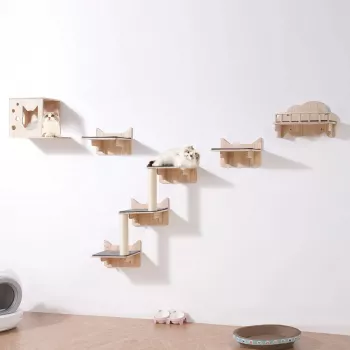
If you want a ready-to-install starting point, the Wall Mounted Cat Shelves & Perches Set is designed to create vertical resting and climbing spots without taking up floor space. It works well as a starter route (low-to-high steps) or as an expansion to an existing cat wall. For best results, plan a gradual path and mount each piece securely so there’s zero wobble when your cat tests it with a confident landing.
FAQ
How high should wall-mounted cat shelves be?
Start with a first step low enough for an easy hop up, then build upward gradually. Keep the route aligned with your cat’s age and mobility, and include a comfortable resting perch at a height your cat chooses to use consistently.
Do cat wall shelves need to be mounted into studs?
Mounting into studs is usually the most secure option and helps prevent wobble over time. If studs aren’t available in the right locations, use anchors rated for your wall type and expected load, and confirm there’s no movement before letting your cat jump up.
How do you get a cat to use new wall perches?
Use treats or toys to guide exploration one step at a time, and add familiar scent like a blanket to make the perch feel safe. If your cat seems hesitant, reduce the first jump distance or add a lower step to build confidence.



Leave a comment