Best Cat Trees for Climbing, Scratching & Cozy Naps
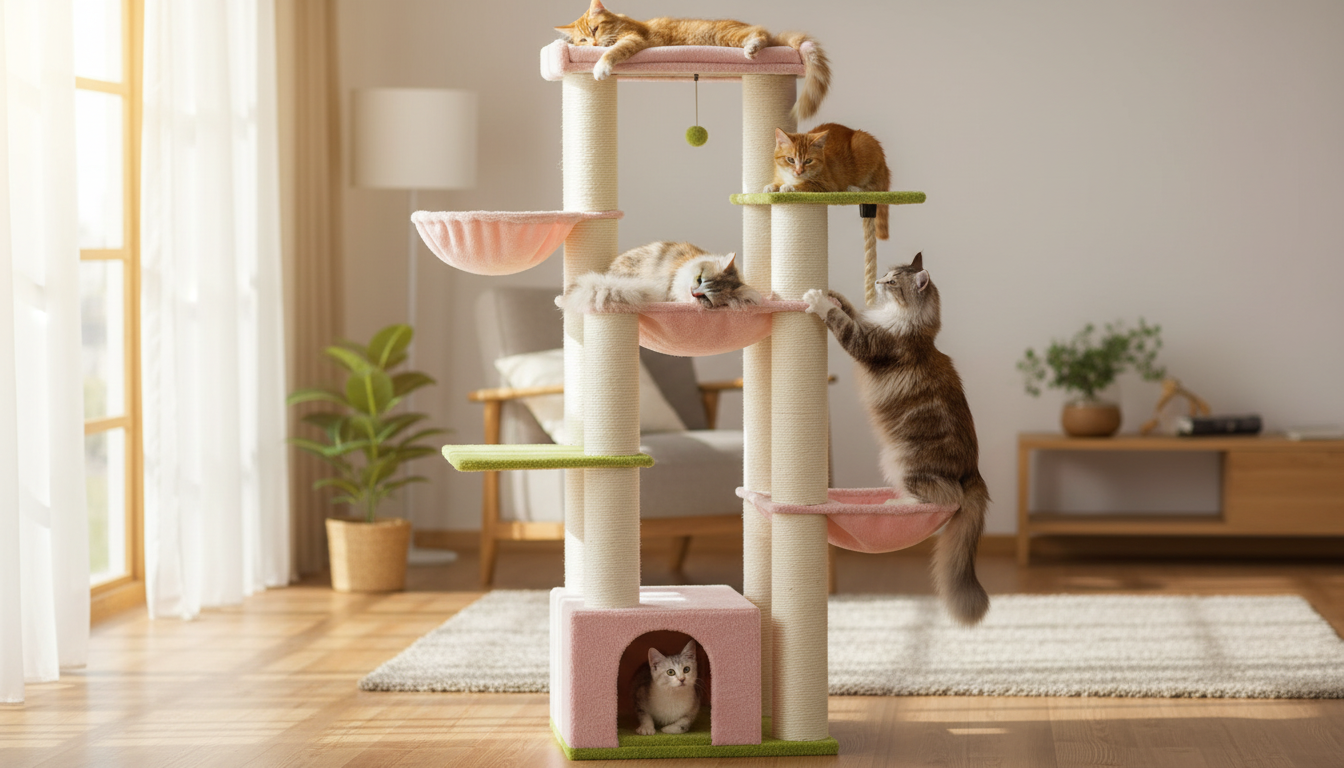
Cat Trees That Keep Cats Climbing, Scratching, and Resting Comfortably
A well-chosen cat tree can reduce furniture scratching, add vertical territory, and give cats reliable places to perch and nap. The best setup depends on a cat’s size, age, activity level, and how much space is available at home.
Why a Cat Tree Helps in Everyday Life
A cat tree does more than “look cute in the corner.” It supports the routines that help indoor cats feel busy, confident, and settled.
- Creates vertical territory: Extra height can ease tension in multi-cat homes by adding more “rooms” without adding floor space.
- Supports natural behaviors: Climbing, scratching, hiding, and perching to observe the household are everyday cat needs.
- Redirects scratching: When the material and location match a cat’s preferences, posts become a better option than couch corners.
- Offers predictable resting spots: A consistent perch or condo helps cats feel secure, especially when the home is busy.
- Adds enrichment: More activity and choice can reduce boredom-linked behaviors like over-grooming, nighttime zoomies, and attention-demand scratching.
For a deeper look at how environment affects feline wellbeing, see the AAFP/ISFM Feline Environmental Needs Guidelines and guidance on environmental enrichment for indoor cats.
Key Features to Look For Before Buying
- Stability: A wide base, thick support posts, and a design that doesn’t wobble when a cat jumps onto upper levels.
- Post diameter and height: Thicker posts are more comfortable to grip; taller posts allow full-body stretches.
- Scratching surfaces: Sisal rope is typically the most durable; sisal fabric offers a flatter scratch; carpet can work but may fray and sometimes “feels like” household carpet.
- Sleeping areas: Larger cats need roomy platforms and baskets; enclosed condos suit cats who prefer to hide.
- Spacing and step-up distance: Kittens and seniors do better with closer, staggered platforms; athletic cats enjoy wider gaps.
- Removable/washable cushions: Helpful when shedding is heavy or allergies are a concern.
- Assembly and maintenance: Labeled parts, clear instructions, and replaceable components can extend usable life.
Scratching is normal communication and self-care for cats. If furniture scratching is a big issue, the ASPCA’s overview of cats and scratching behavior pairs well with adding the right post in the right place.
Choosing the Right Size and Layout for Your Cat
Start with your cat’s body type and movement style, then match the layout to your home. The goal is a tree your cat can actually use comfortably—jumping up, turning around, stretching, and lounging without feeling cramped or unstable.
- Large or long-bodied cats: Prioritize oversized perches, reinforced posts, and a base that resists tipping.
- Energetic climbers: Look for multiple tiers, a tall top perch, and a stable route upward (not one narrow ladder to the peak).
- Shy cats: Include a covered condo plus at least one mid-level perch for “safe” observation.
- Seniors or mobility-limited cats: Choose lower height, wide steps, and fewer abrupt jumps; place it near a favorite resting area.
- Multi-cat homes: Add more than one perch at similar heights to reduce competition; consider two separate trees if guarding occurs.
- Measure the spot: Leave clearance from shelves and curtains, and avoid placing it where cats can knock items down during leaps.
Quick Matching Guide: Cat Needs to Cat Tree Features
| Cat profile | Best features | Avoid |
|---|---|---|
| Big cat (15+ lb or very long-bodied) | Extra-wide platforms, thick posts, reinforced base, roomy condo | Narrow perches, thin posts, tall-only designs with a small footprint |
| High-energy climber | Multiple tiers, tall top perch, stable jump paths, durable sisal | Wobbly frames, limited levels, weak scratching posts |
| Senior or mobility-limited | Lower height, wide steps, closer platform spacing, soft bedding | Large gaps between levels, very tall towers, slippery surfaces |
| Multi-cat household | Two+ perches, multiple scratch zones, more than one sleeping spot | Single “best” perch that encourages guarding |
| Shy or anxious cat | Covered condo, mid-level perch, placement in a quiet corner | High-traffic placement, fully open designs only |
Where to Place a Cat Tree for Maximum Use
Placement often matters as much as the tree itself. A perfect tree in an irrelevant location can become expensive furniture.
- Near a window: “Cat TV” encourages daily use, as long as the area is safe and draft-free.
- Close to an existing favorite lounge area: Familiar territory helps cats adopt it quickly.
- Next to a problem scratching zone: Put the post right where the cat already wants to scratch (sofa corner, rug edge) so the “yes” option is easier than the “no.”
- Match the household vibe: Social cats often prefer a main room; cautious cats may choose a quieter corner.
- Prevent rocking: Avoid unstable flooring spots; use furniture pads or an anti-slip mat if needed.
- Consider anchoring for tall trees: Especially for heavy cats or enthusiastic jumpers, when the design supports it.
Helping Cats Start Using It (Without a Battle)
Spotlight: A Sturdy Option for Bigger Cats
If you’re shopping specifically for a more supportive build, consider the Large Cat Tree for Big Cats.
For long-term sturdiness, periodic tightening helps. A tool like a Heavy-Duty Aluminum Pipe Wrench can make quick maintenance easier if hardware loosens over time.
Care, Safety Checks, and Long-Term Value
FAQ
How tall should a cat tree be?
Match height to your cat’s mobility and the room’s safe climbing space. Many cats enjoy a high perch, but stability and easy step-ups matter more than maximum height.
What scratching material lasts the longest?
Sisal rope is commonly the most durable, with sisal fabric also holding up well for many cats. Carpet varies widely and can fray faster depending on construction and scratching style.
Is a wall anchor necessary for a large cat tree?
Anchoring is recommended for taller trees, heavier cats, or active jumpers when the design supports it. It reduces tipping risk and helps minimize wobble during climbs and leaps.



Leave a comment