Adjustable Saddle PU Leather Bar Stools: Sizing & Care
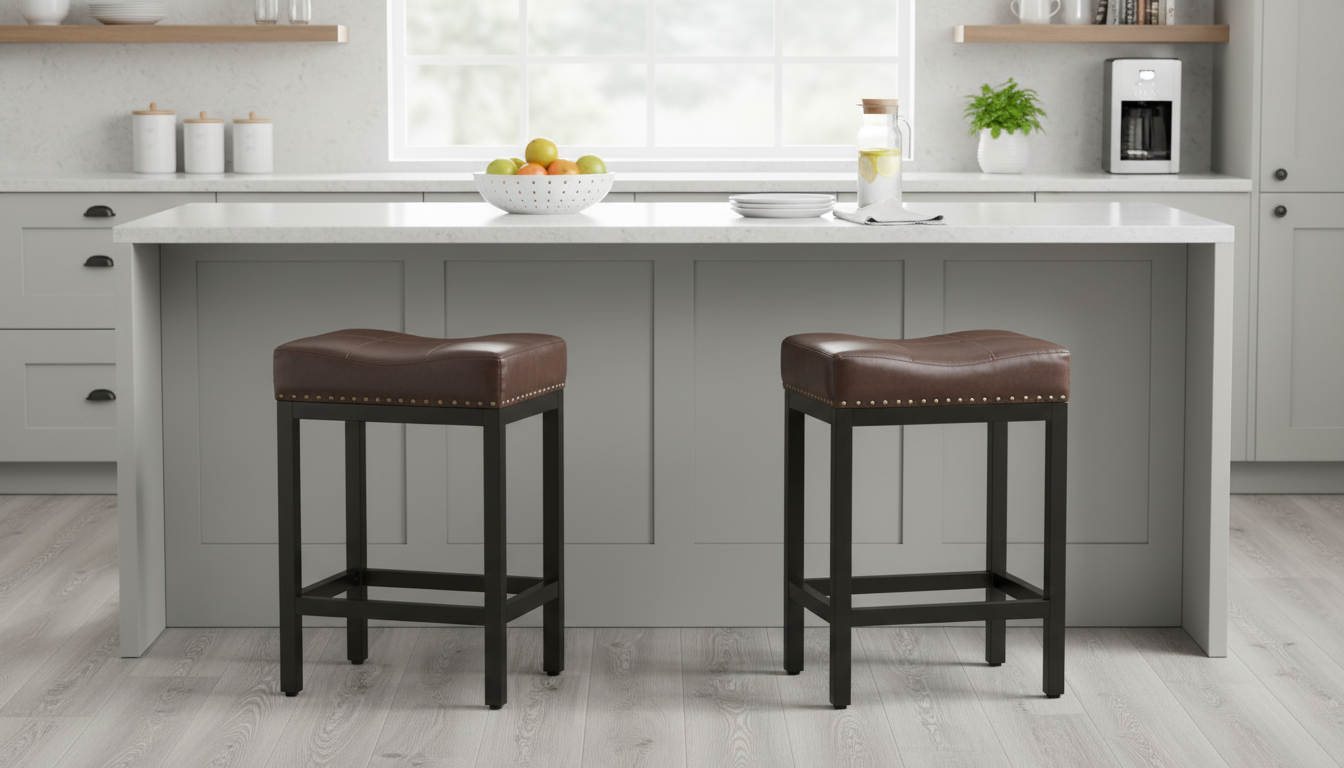
Saddle-Style PU Leather Adjustable Bar Stools with Metal Base
Saddle-style bar stools pair a contoured seat with a compact footprint, making them a practical choice for kitchen islands, home bars, and small dining nooks. This guide breaks down comfort, adjustability, stability, and care so it’s easier to match an adjustable saddle stool to the right height, room layout, and daily use.
What a saddle-style stool changes about comfort
A saddle seat is shaped to follow the body more naturally than a flat, round top. That contour can encourage a slightly more open-hip sitting position, which many people find less “pinched” during quick meals or short work sessions at an island.
- Contoured “saddle” seat supports natural posture for short to moderate sits.
- Curved edges can reduce pressure at the thighs when you shift positions—especially when the height is set correctly.
- Backless silhouettes keep the room feeling lighter and often slide fully under counters to save walkway space.
- Great for quick meals, coffee breaks, casual conversation, and prep work; less ideal for long, leaned-back lounging.
Adjustable height: getting the fit right for counters and bars
Height is where adjustable stools shine—especially in shared spaces where different people (and different footwear) can change the ideal seat level. A comfortable setup typically leaves enough clearance between the seat and the underside of the counter/bar so legs can move freely, and so you don’t feel “jammed” into the surface.
- Measure your surface height (floor to underside/edge) and confirm the stool’s seat-height range fits that target.
- Swivel-and-lift designs make it easy to dial in the height without tools.
- If there’s a footrest ring, set height so your feet are supported without forcing knees upward.
Quick sizing guide for adjustable bar stools
| Surface type | Typical surface height | Common target seat height | Comfort check |
|---|---|---|---|
| Counter / kitchen island | 34–36 in (86–91 cm) | 24–26 in (61–66 cm) | Aim for ~9–12 in (23–30 cm) clearance from seat to counter underside |
| Bar height | 40–42 in (102–107 cm) | 28–30 in (71–76 cm) | Feet supported; knees not forced high; stable posture when turning |
| Custom / mixed-use space | Varies | Choose the widest adjustable range available | Confirm lowest and highest settings both work for your users |
PU leather seat: everyday feel and cleanup
In kitchens and entertainment areas, easy cleanup is a big advantage. PU leather offers a smooth surface that wipes down quickly after spills, splashes, or fingerprints. For day-to-day comfort, it tends to feel softer than bare wood and less cold than metal—useful in spaces that see frequent, casual use.
- Wipe-clean surface suited for snack time, cocktails, and busy kitchens.
- Neat stitching and a tight upholstery fit help the seat keep its shape and look polished longer.
- Routine care: dust or wipe with a soft damp cloth; use mild soap if needed; dry promptly.
- Avoid harsh solvents, abrasive scrubbers, and prolonged direct sunlight to help prevent early aging of synthetic finishes.
Metal base and stability: what to check before placing on floors
A sturdy base matters most when people swivel, scoot in and out, or sit down a bit off-center (which happens constantly in real life). Metal bases often add reassuring weight and reduce wobble compared with lighter constructions, but the footprint and floor contact points still make a difference.
- Wider base footprints generally feel steadier; smaller bases tuck in more easily under tight counters.
- For hardwood, tile, or laminate, use protective pads or confirm the base has non-marking contact points to reduce scuffs and noise.
- Check that the lift is smooth and the swivel resistance feels consistent—not too loose, not too stiff.
For broader context on furniture safety and performance expectations, it can help to review the overview of BIFMA furniture standards.
Style and placement ideas for kitchens and home bars
If you’re planning a tighter aisle behind seating, common clearance references from the ADA Standards for Accessible Design can be a helpful reality check for comfortable circulation.
Assembly, daily use, and care checklist
For general ergonomics guidance—useful if stools double as a quick work-from-island setup—see OSHA’s ergonomics resources.
Product spotlight and quick decision guide
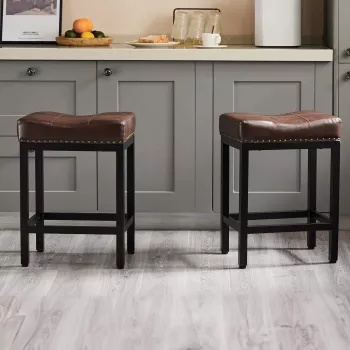
If you want a streamlined, easy-care seating option that can adapt to different users, Saddle-Style PU Leather Adjustable Bar Stools with Metal Base is designed to combine an ergonomic saddle profile, wipeable PU leather upholstery, and a sturdy metal base for everyday seating.
- 52-Cup 5-Stage Water Filter Dispenser with Real-Time TDS Meter & Lead Reduction for convenient filtered water when entertaining.
- Heavy-Duty Aluminum Pipe Wrench for tackling quick home adjustments while you’re updating your bar or island area.
FAQ
How many bar stools fit along a kitchen island?
A practical rule is to allow about 24–30 inches of width per stool so people can sit without bumping elbows. Armless, backless stools can sometimes sit a bit closer, but it’s still important to leave enough walkway clearance behind the seating for comfortable traffic flow.
Are saddle-style stools comfortable without a backrest?
They’re typically comfortable for short-to-moderate sitting because the saddle contour supports a more natural position and reduces sharp pressure at the seat edge. If you expect long, leaned-back sitting (movie nights, extended work sessions), a stool with a supportive backrest is often a better match.
How do you clean PU leather bar stool seats?
Wipe with a soft, damp cloth for routine cleanup, and use mild soap for tougher spots. Avoid solvents and abrasive scrubbers, dry the surface fully, and keep the stools away from prolonged direct heat or strong sunlight to help the finish last.


Leave a comment