4-Pack 10,000 lb Ratchet Straps w/ Double J Hooks
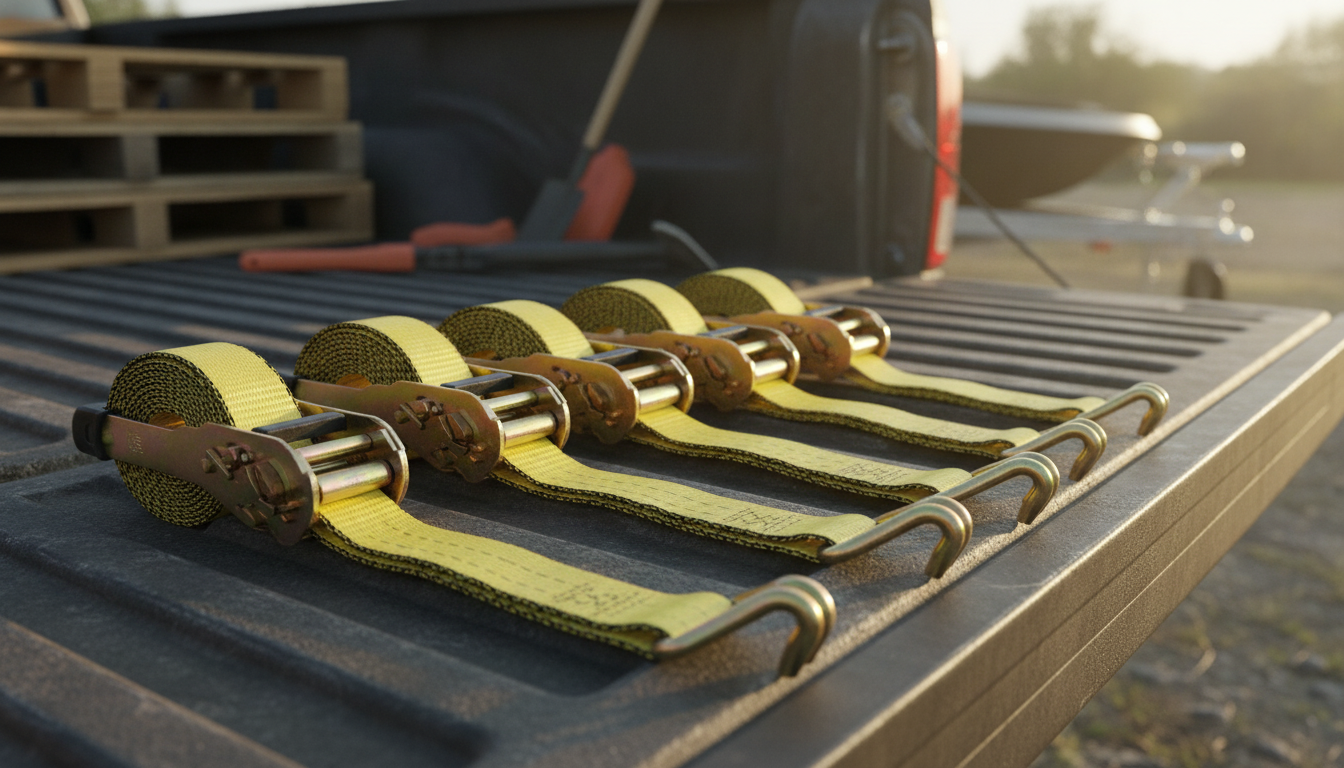
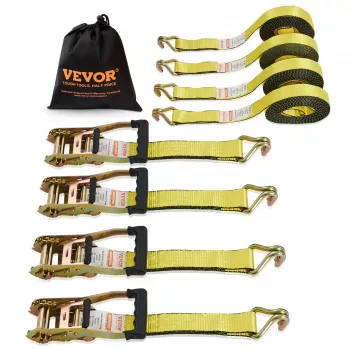
4-Pack Ratchet Tie Down Straps (10,000 lb Break Strength) with Double J Hooks for Cargo Securement
Securing cargo is easier when the straps, hooks, and ratchet are built for heavy loads and repeat use. This 4-pack set features a 10,000 lb break strength rating and double J hooks designed to grab common anchor points on trailers, trucks, and equipment, helping loads stay stable over bumps, wind, and braking.
What’s Included and What It’s Built For
This set is designed for everyday hauling as well as demanding transport jobs where consistent tension and reliable hardware matter.
- 4-pack of ratchet tie down straps for bundling and anchoring cargo
- 10,000 lb break strength rating for demanding haul and transport tasks
- Double J hooks for fast attachment to many standard tie-down points
- Designed for cargo on trailers, pickup beds, roof racks, utility racks, and equipment transport
For a ready-to-ship option, see the 4PK Ratchet Tie Down Straps 10000 lb Break Strength with Double J Hook for Cargo.
Key Specs at a Glance
Strength numbers are only helpful when they’re understood the right way. Break strength describes when a strap may fail under ideal test conditions; it’s not the same as the working load limit (WLL), which is the safe load rating used for real-world securement planning and compliance.
- Use rating terms correctly: break strength is not the same as working load limit
- Choose strap capacity based on the heaviest part of the load and number of tie-down points
- Match hook style to the anchor hardware to reduce slippage risk
| Feature | What to Look For | Why It Matters |
|---|---|---|
| Pack size | 4 straps | Supports multiple anchor points and better load stability |
| Strength rating | 10,000 lb break strength | Provides headroom for heavy-duty applications (verify WLL for compliance) |
| Hook type | Double J hook | Helps fit common rail/slot/tie-down anchors and speeds setup |
| Best uses | Cargo, equipment, bundled loads | Versatile for hauling and storage tie-downs |
For additional guidance on securement expectations and safe towing practices, consult FMCSA Cargo Securement Rules and NHTSA Trailer Towing Safety.
How to Use Ratchet Straps Safely (Practical Steps)
Ratchet straps work best when the webbing is clean, the pull line is straight, and the anchor points are truly load-rated.
- Inspect the webbing for cuts, fraying, heat damage, or chemical staining before each use; replace if damaged.
- Confirm anchor points are rated and fixed to the vehicle/trailer frame (not thin sheet metal or plastic trim).
- Attach double J hooks fully seated; avoid tip-loading or hooking onto sharp edges.
- Feed the strap through the ratchet spool and remove slack by hand before ratcheting.
- Tighten gradually, alternating sides for balanced tension; stop when the load is stable (over-tightening can crush cargo).
- Tie off excess strap to prevent wind whip, loosening, or tangling.
- Re-check tension after the first 5–10 minutes of driving and at each stop.
Choosing the Right Setup for Different Cargo
Different loads shift in different ways. The goal is to reduce movement in all directions while protecting the cargo and the strap webbing.
- Motorcycles/ATVs: use 4 points (two front, two rear) and keep straps off hot exhaust and moving parts.
- Lumber/pipe: add edge protectors to prevent webbing cuts and distribute pressure.
- Appliances/furniture: protect corners and avoid ratcheting against fragile panels; use padding where straps contact the item.
- Boxes and totes: compress lightly and rely on multiple straps to reduce shifting instead of maximum tension on one strap.
- Equipment with sharp metal: route straps to minimize abrasion and avoid contact with burrs.
Common Mistakes That Cause Slips, Damage, or Early Wear
Most tie-down failures aren’t “mystery” failures—they come from mismatched anchor points, poor routing, or straps that should have been retired.
- Using break strength as the only sizing metric instead of confirming a working load limit appropriate to the job
- Hooking onto non-rated points (bumper covers, thin rails, plastic trim) that can deform under tension
- Leaving twists in the webbing, which reduces strength and increases loosening
- Allowing webbing to rub against sharp edges without corner protectors
- Ratcheting with the handle at an awkward angle that prevents full lock engagement
- Storing straps wet or dirty, which can accelerate mildew, grit abrasion, and stiffness
Care, Storage, and Longevity Tips
A few minutes of care after unloading can keep ratchets operating smoothly and help webbing maintain flexibility over time.
When Double J Hooks Are a Good Match
Helpful Add-On Tools for the Job
Securement often goes hand-in-hand with adjusting equipment, tightening trailer accessories, or handling stubborn fittings at the jobsite. A durable hand tool can be a practical companion in a truck box or trailer kit, such as the Heavy-Duty Aluminum Pipe Wrench.
FAQ
What does 10,000 lb break strength mean for everyday hauling?
Break strength is the approximate load where the strap may fail under test conditions, not the safe load you should plan around. For everyday hauling, confirm the working load limit (WLL) printed on the strap label and follow applicable cargo securement rules for your situation.
How many ratchet straps are needed to secure a load safely?
Many loads require at least two straps to limit forward/back and side-to-side movement, but heavier or taller items often need more. Vehicles and equipment are commonly secured with a four-point setup, and the right number depends on weight, load length, center of gravity, and the quality of the anchor points.
Can ratchet straps be used in rain or winter conditions?
Yes, but moisture, slush, and temperature changes can affect tension and ratchet operation. Re-check tightness after driving a short distance, keep ice from packing into the ratchet mechanism, and dry straps before storage to reduce corrosion and webbing wear.




Leave a comment