120W + 50000mAh Power Bank for Samsung: What to Check
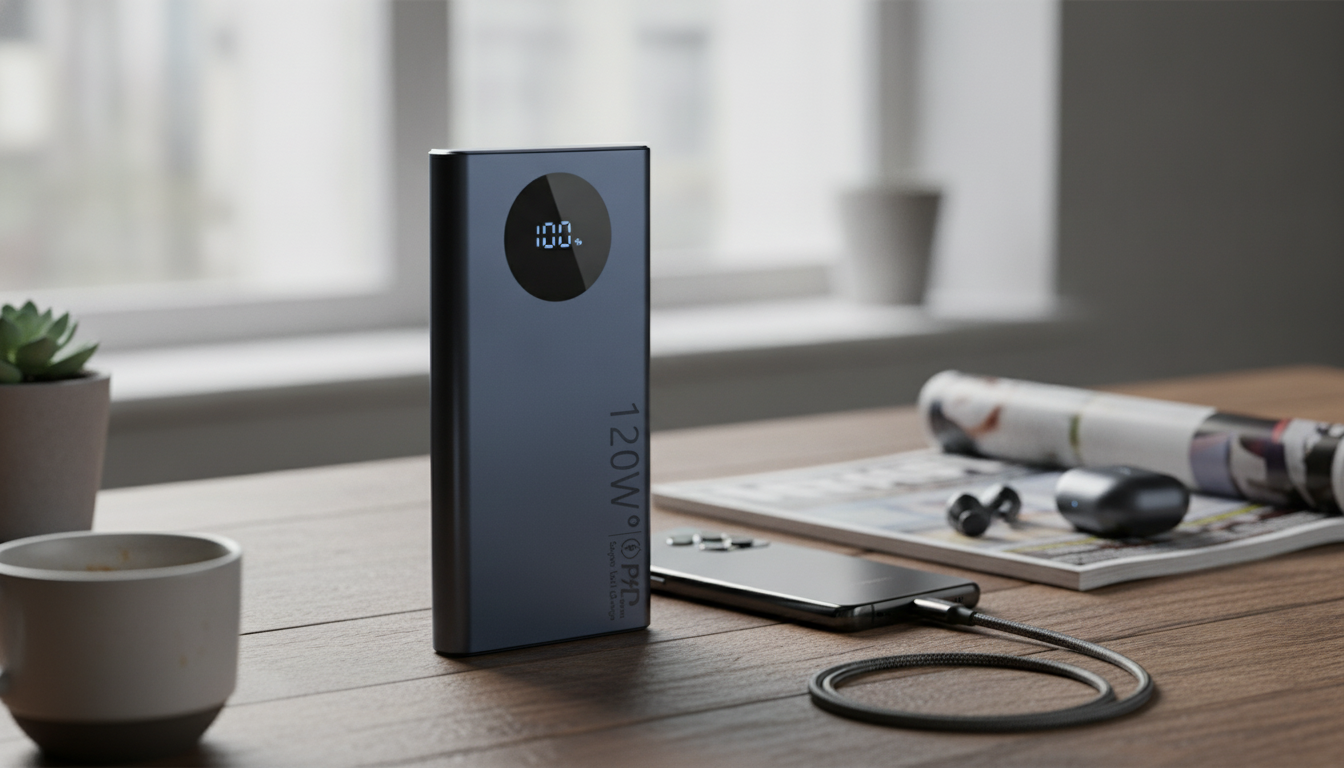
120W Fast Charging + 50000mAh: Why It’s a Big Deal for Samsung Users
A high-wattage, high-capacity power bank can keep Samsung phones and other devices running through long workdays, travel, and emergencies. The combination of “120W” (potential charging speed) and “50000mAh” (stored capacity) is meant for people who don’t want to ration battery—or fight over outlets—when they’re away from a wall charger.
That said, real-world results depend on the charging standard, cable quality, device limits, and heat management. Understanding those basics helps you pick a power bank that actually triggers Samsung fast charging modes and delivers practical, safe performance.
Why 120W and 50000mAh Matter for Samsung Users
Higher wattage matters most when your phone can negotiate a higher charging profile (and the cable can carry it). Large capacity matters when you need multiple top-ups for a phone, earbuds, and maybe a tablet or handheld device—without recharging the power bank every night.
Where this type of power bank fits best
- Travel days and layovers: multiple devices, limited outlets, and long stretches away from hotel rooms.
- Driving or delivery work: screen-on navigation and high brightness can drain a phone fast.
- Outdoor events: photos, video, tickets, and messaging all day.
- Power outages and emergency kits: backup power for phones, lights, and small USB devices.
- Campus life and shared charging: a “community battery” for roommates or study groups.
Keep expectations realistic: the “50000mAh” label is based on internal battery cells (often around 3.7V). Once the power bank boosts voltage to 5V/9V (or higher) and manages heat, the usable energy delivered to your phone is lower than a simple mAh-to-mAh comparison.
Compatibility Checklist for Samsung Fast Charging
Samsung phones generally fast charge best through USB-C Power Delivery, and many models use USB PD with PPS (Programmable Power Supply) for “Super Fast Charging.” The power bank, cable, and phone must agree on the same charging language for top speeds to engage.
| What to check | Why it matters | What to look for |
|---|---|---|
| Charging standard | Determines whether Samsung fast charging engages | USB-C PD; ideally PD with PPS for Super Fast Charging |
| Cable rating | Prevents slow charging and overheating | USB-C to USB-C cable rated for high wattage (e.g., 60W/100W) |
| Port type | Affects speed and device support | USB-C for fast charge; USB-A often slower |
| Power sharing | Multi-device charging can reduce speed | Specs that clarify total vs per-port output |
| Device limits | Phone sets the maximum it will accept | Match expectations to the Samsung model’s supported charging speed |
For background on standards, USB-IF’s overview of USB Power Delivery is a helpful reference. For Samsung-specific behavior and settings, see Samsung Support.
What 50000mAh Means in Real Use
| Use case | Why it fits | Practical tip |
|---|---|---|
| All-day phone + earbuds | Multiple top-ups without hunting outlets | Charge the phone via USB-C PD; use another port for earbuds |
| Tablet support | Higher capacity helps sustain larger batteries | Use USB-C port and a high-rated cable |
| Emergency kit | Long standby with intermittent charging | Store at partial charge if not used for long periods |
| Road trips | Shared charging for multiple passengers | Choose ports and cables in advance to avoid slow charging |
Air travel note (important for 50000mAh power banks)
Airlines commonly limit power banks by watt-hours (Wh), often around 100Wh (sometimes up to 160Wh with approval). Many very large power banks can exceed those limits. Check your power bank’s Wh rating and airline policy before you pack; the FAA’s guidance is a solid starting point: FAA Pack Safe — batteries and power banks.
Charging Performance: What Affects Speed
Safety and Longevity: Using High-Power Banks Responsibly
Product Snapshot: 120W Fast Charging Power Bank 50000mAh for Samsung
If your priority is long backup time plus the ability to support modern fast-charging behaviors, the 120W Fast Charging Power Bank 50000mAh for Samsung is built for that “all devices, all day” scenario. Before purchasing, confirm you’ll be using a USB-C to USB-C cable rated for the output you want, and keep in mind that your specific Samsung model determines the maximum it will accept.
| Item | Detail |
|---|---|
| Product | 120W Fast Charging Power Bank 50000mAh for Samsung |
| Availability | In stock |
| Price | 15.51 USD |
| Product page | View product |
Other in-stock add-ons for travel and emergency prep
- 52-Cup 5-Stage Water Filter Dispenser with Real-Time TDS Meter & Lead Reduction for home readiness when outages or boil notices disrupt routine.
- How to Use AI Tools to Regain Control of Your Finances (Digital Debt Management Guide) for organizing budgets and bills—especially useful when travel and device upgrades add expenses.
Tips for Getting the Best Results With Samsung Phones
FAQ
Will a 120W power bank fast charge a Samsung Galaxy phone at 120W?
Usually not. Your Samsung phone sets the maximum charging power it will accept, and many models top out well below 120W. To get the fastest mode your phone supports, the power bank must support USB PD (ideally with PPS) and you’ll need a proper USB-C to USB-C cable.
How many times can a 50000mAh power bank charge a Samsung phone?
It depends on your phone’s battery size and real-world efficiency losses from voltage conversion and heat. In practice, expect a noticeably lower number than a simple “50000 divided by phone mAh” estimate; larger Galaxy models will get fewer full charges than smaller ones.
Can a large power bank be taken on an airplane?
Sometimes, but many airlines restrict power banks by watt-hours (often 100Wh, with some allowing up to 160Wh with approval). Power banks must typically be carried in your cabin baggage, not checked luggage, so it’s best to confirm the Wh rating and your airline’s policy before traveling.



Leave a comment