12.5ft Telescoping Ladder: One-Button Retraction & Compact
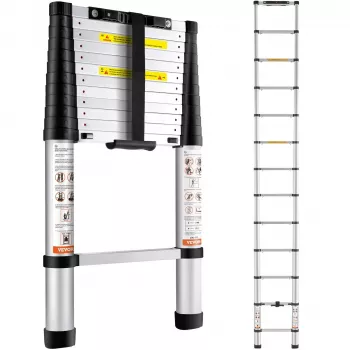
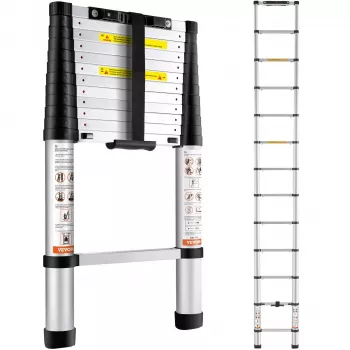
12.5ft Telescoping Ladder with One-Button Retraction: Compact Reach for Home and Jobsite
A telescoping ladder is built for people who need real reach but don’t have space for a full-size extension ladder. This 12.5ft collapsible design focuses on quick height adjustments, controlled one-button retraction, and easy storage for apartments, garages, vans, and workshops.
What a Telescoping Ladder Does Differently
Traditional extension ladders are effective, but they can be awkward to transport, hard to store, and often “all or nothing” when it comes to length. A telescoping ladder solves those pain points by changing how you get height and how you put the ladder away.
- Extends rung-by-rung to the needed height instead of committing to a single long frame.
- Collapses into a shorter, carry-friendly form for closets, trunks, and tool rooms.
- One-button retraction helps reduce sudden drop and speeds up pack-away.
- Useful for indoor tasks (ceilings, shelving) and outdoor tasks (gutters, eaves) when used on stable ground.
Highlights of the 12.5ft One-Button Retraction Ladder
For everyday maintenance and light trade work, 12.5 feet is a practical sweet spot—tall enough for common reach tasks, yet compact when you’re done. The ability to stop at a partial height is a big advantage in tight rooms and narrow hallways where a longer ladder can feel oversized.
- 12.5ft maximum reach for common home maintenance and light trade work.
- Telescoping sections make it easy to stop at partial height for lower tasks.
- One-button retraction streamlines closing—especially helpful when moving between rooms or packing into a vehicle.
- Collapsible form helps reduce storage footprint compared with traditional extension ladders.
- Designed to be a practical grab-and-go option for routine ladder needs.
Quick Snapshot
| Feature | Why it matters |
|---|---|
| 12.5ft extension | Handles many common tasks like changing fixtures, reaching upper cabinets, and exterior touch-ups. |
| Telescoping height adjustment | Use only the height needed, improving convenience in tight spaces. |
| One-button retraction | Faster, more controlled closing when finishing a task. |
| Collapsible storage | Fits better in closets, car trunks, and work vans than long-frame ladders. |
Best Uses Around the House and Workshop
A compact ladder is only “convenient” if it actually gets used. A telescoping model shines when tasks pop up across different rooms, or when you’re carrying tools and don’t want to make multiple trips.
- Ceiling-level work: smoke detectors, light fixtures, ceiling fans (follow manufacturer instructions and safety guidance).
- Garage and storage: accessing overhead racks, seasonal bins, and high shelves.
- Exterior tasks: basic maintenance such as cleaning reachable areas and quick inspections (only on stable, level surfaces).
- DIY projects: painting prep, measuring, mounting, and minor repairs where portability is important.
If your home toolkit is getting an upgrade, pair ladder work with the right hand tools for the job. For plumbing adjustments or grip-heavy tasks, a dependable wrench can make quick work of fittings and stubborn connections.
Safe Setup Checklist for Telescoping Ladders
Even a compact ladder needs disciplined setup. For broader ladder guidance, consult the American Ladder Institute and the NIOSH ladder safety resources, then follow the specific manual for your ladder model.
- Confirm the ladder is fully locked at the chosen height; never climb if any section is not seated and secured.
- Place on a firm, level surface; avoid slick flooring, loose gravel, mud, or uneven ground.
- Maintain three points of contact while climbing (two hands and one foot, or two feet and one hand).
- Keep the work area clear—no children or pets near the ladder base during use and retraction.
- Do not exceed the ladder’s rated capacity; include body weight plus tools and materials.
- Avoid overreaching; climb down and reposition instead of leaning sideways.
How One-Button Retraction Can Improve Day-to-Day Use
Where a telescoping ladder really earns its keep is the “between tasks” time—moving from room to room, hopping in and out of a van, or packing up quickly after finishing a small repair. One-button retraction is designed to shorten that transition without turning cleanup into a wrestling match.
- Quicker transitions between tasks: extend, work, retract, move—without wrestling a long ladder.
- More controlled closing: helps reduce abrupt movement when collapsing (hands should still stay clear of pinch points).
- Easier storage routine: a ladder that’s simple to put away is more likely to be stored properly and kept in good condition.
- Helpful for mobile users: service calls, property managers, and anyone carrying tools in and out of a vehicle.
Care, Storage, and Longevity Tips
When a Telescoping Ladder Is a Better Fit Than a Traditional Extension Ladder
In-Stock Picks to Build a More Capable Tool Kit
- 12.5ft Telescoping Ladder – Collapsible Extension Ladder with One-Button Retraction
- Heavy-Duty Aluminum Pipe Wrench
FAQ
How tall should a ladder be for a one-story home?
A common rule of thumb is to choose a ladder that lets you reach the work area without standing on the top rungs, since you need a safe standing level and handhold. Reaching eaves or gutters often requires more ladder length than indoor ceiling work, so check your ladder’s guidance and set it at the recommended angle and placement.
Is one-button retraction safe on a telescoping ladder?
One-button retraction can help provide a more controlled closing action, but safe use still depends on keeping hands clear of pinch points and retracting in a deliberate, controlled way. Always follow the ladder’s manual, confirm locks function properly, and keep the area clear during retraction.
How do you store a telescoping ladder to keep it working smoothly?
Store it in a dry place, wipe dirt and grit off the rails after use, and avoid stacking heavy items on top that could bend or dent sections. During transport, secure it so it can’t slide, and do quick inspections for dents, loose parts, or binding before each use.




Leave a comment