AI Mindfulness: 7-Day Micro-Practices for Calm
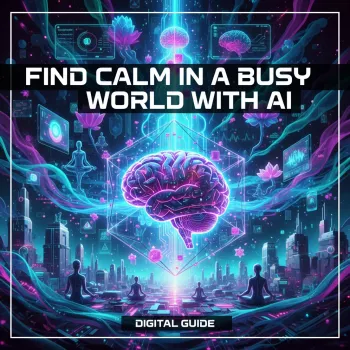
Find Calm in a Busy World with AI: Mindfulness, Meditation, and Emotional Balance
A busy schedule, constant notifications, and mental overload can make calm feel out of reach. Practical mindfulness doesn’t require long retreats or perfect silence—it requires small, repeatable moments of attention and a plan to handle stress spikes. AI can support that plan by helping structure short practices, generating personalized reflection cues, and turning scattered thoughts into routines you can actually repeat. The goal isn’t to “optimize” your emotions; it’s to build steadier awareness so stressful moments feel more workable.
For a step-by-step companion that keeps things simple and consistent, see Find Calm in a Busy World with AI | Mindfulness eBook | How to Use AI for Mindfulness, Meditation & Emotional Balance.
What AI adds to mindfulness (and what it cannot replace)
Used well, AI acts like a planning partner for your practice—helping you show up in small ways when your brain would rather keep scrolling.
- AI adds structure: It can generate a daily plan, gentle reminders, and short scripts for breathing, grounding, or body scans.
- AI adds clarity: It can help summarize journal entries into themes—common triggers, needs, and patterns—then suggest a few coping options to test next time.
- AI adds personalization: You can tailor session length, tone (more soothing, more direct), and focus (stress, sleep, focus, self-compassion) based on your preferences.
- AI cannot do the practice: Calm comes from attention training and repetition, not from reading advice alone.
- AI is not crisis care: If symptoms feel urgent, severe, or persistent, reach out to qualified support. The World Health Organization’s mental health resources offer guidance on when and how to seek help.
For evidence-based background on mindfulness, the American Psychological Association overview of mindfulness meditation is a helpful reference.
A simple 7-day calm plan using AI micro-practices
Micro-practices work because they reduce friction. Two to ten minutes is enough to build the “return to the present” skill—especially when the goal is consistency, not perfection.
Weekly micro-practice schedule
| Day | Time | Practice | AI support idea |
|---|---|---|---|
| 1 | 2 min | Breath counting | Generate a 6-line breathing script |
| 2 | 3 min | Body scan | Create a scan checklist (head-to-toe) |
| 3 | 5 min | Name the feeling | Offer emotion words + a reflection prompt |
| 4 | 5 min | Mindful walking | Write a single attention cue paragraph |
| 5 | 6 min | Self-compassion | Draft 3 supportive phrases in a chosen tone |
| 6 | 7 min | Thought labeling | Provide label examples (planning/worrying/etc.) |
| 7 | 10 min | Combined + review | Summarize wins and suggest next-week tweaks |
Keep sessions short and consistent; increasing duration is optional once the habit feels stable. If you miss a day, restart with Day 1 for two minutes—momentum matters more than “catching up.”
Prompt ideas for mindful guidance without overthinking
Clear, constrained requests tend to produce calmer guidance. Include time, focus area, and tone, and keep personal details general.
- Short guided practice: “Write a 4-minute mindfulness meditation focusing on breath and shoulders, with simple language and 10-second pauses.”
- Stress reset: “Give a 90-second reset routine for an anxious moment at work, including posture, breathing, and a single grounding question.”
- Emotional balance reflection: “Ask me 5 gentle questions to understand what I’m feeling and what I need right now.”
- Sleep wind-down: “Create a 6-minute body scan for bedtime, avoiding overly energizing language.”
- Decision overload: “Help me list options, values impacted, and one small next step—without judging the choice.”
Using AI journaling to reduce stress and strengthen awareness
Healthy boundaries: privacy, accuracy, and emotional safety
How the eBook supports a repeatable calm routine
When motivation dips, simplicity wins. Find Calm in a Busy World with AI | Mindfulness eBook | How to Use AI for Mindfulness, Meditation & Emotional Balance is designed for real schedules—short sessions, clear steps, and easy ways to personalize your practice without turning it into another complicated project.
Pairing calm with everyday goals (optional add-on routines)
- Before tasks: Pair a 2-minute breathing reset with a quick planning pass (pick one priority, define a first step).
- Before hard conversations: Do a 60-second emotional check-in—name the feeling, name the need, choose a respectful boundary.
- When money stress spikes: Reduce mental load with a structured plan alongside your calming routine. The guide How to Use AI Tools to Regain Control of Your Finances | Digital Debt Management Guide | Learn How to Use AI to Manage Debts, Build Financial Freedom & Stay on Track can help turn swirling worry into a short list of next actions.
- Keep actions measurable: one message, one bill, one appointment—after a brief calm reset.
Quick reference for calm tools by moment
| Moment | What to do (1–3 min) | What to ask AI for |
|---|---|---|
| Before a meeting | Exhale-focused breathing + relax shoulders | “Write a 90-second calming script for pre-meeting nerves.” |
| After bad news | Name emotion + 5-senses grounding | “Give me 5 grounding questions that are compassionate and practical.” |
| End of day | Short body scan + intention for tomorrow | “Create a 4-minute wind-down scan and one closing reflection question.” |
FAQ
Can AI replace a meditation teacher or therapy?
No. AI can support practice structure and reflection, but it can’t provide diagnosis, individualized treatment, or crisis care; if symptoms are severe or persistent, professional support is the safest next step.
What is the safest way to use AI for mindfulness and journaling?
Share minimal sensitive information, keep descriptions general, review privacy settings, and treat AI outputs as suggestions. Focus on brief exercises like breathwork, body scans, and grounding rather than deep processing of traumatic details.
How long does it take to feel benefits from short mindfulness sessions?
Some people feel a small calming effect immediately, especially from slow exhale breathing. More durable benefits typically come from consistency over weeks, so starting with 2–5 minutes daily and tracking stress or attention changes works well.





Leave a comment